esolerl
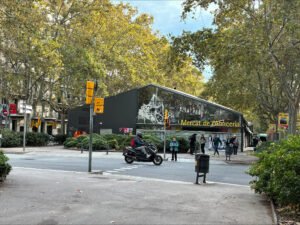
Traditional Markets in Barcelona are an important part of the city’s identity. In Gràcia, Mercat de l’Abaceria is much more than a place to do the shopping. For generations, its stalls have been part of everyday life in the neighbourhood.
That is why its return to its historic location was eagerly awaited by both traders and residents. The market reopened to the public on Tuesday, 17 November 2026, after operating for eight years in a temporary tent on Passeig de Sant Joan.
Its return was also marked by a celebration. On Saturday, 21 November, traders and local residents organised a festive event to welcome the market back. There were children’s activities, a workshop with the Castellers de Gràcia and live music. The celebration turned the reopening into an event shared by the whole neighbourhood.

Eight years away from its historic location
In 2018, the traders moved to Passeig de Sant Joan after the market building closed for renovation. At first, the temporary location was expected to remain in use for around two and a half years. However, several unexpected difficulties delayed the project.
The removal of the asbestos roof, the COVID-19 pandemic and the discovery of archaeological remains complicated the schedule. In addition, there were delays in the tendering process. As a result, traders spent eight years in the temporary facility before returning to Travessera de Gràcia.
The renovated market has 37 businesses: 30 indoor stalls, six outdoor stalls and one supermarket. Moreover, it includes multipurpose spaces and areas for neighbourhood activities.
The importance of traditional markets in Barcelona
The origins of Mercat de l’Abaceria date back to 1892. Before the building was constructed, vendors and farmers sold their products outdoors in what is now Plaça de la Revolució. Over time, the market grew alongside Vila de Gràcia.
Furthermore, Barcelona has 43 municipal markets, which received more than 72 million visits in 2024. Therefore, these markets continue to play an important role in neighbourhood commerce.
Nowadays, different ways of shopping coexist, from supermarkets to online retail. However, traditional markets offer personal service, product knowledge and family businesses passed down through generations.
https://youtu.be/2wAwSNDg4fc?si=wjvYwN4VAwiq3qB9