
 kbutler1
February 2026 saw many parts of Dublin, the Irish Capital, struggle with constant rainfall that pushed an already suffering capital into pure chaos. Having dealt with rainfall every day since the turn of the new year, and drainage systems being weakened further as the weeks went by, this was only the start of what we would later be known as, the Dublin Floods. With earlier storms had caused minimal damage, it was the continued downpours across February that led to the most disruptive scenes. From cars submerged to rail services and commuters facing significant delays, this was not a single extreme event, but rather, a cumulative result of the constant rainfall that finally overwhelmed the city’s infrastructure.
Table of Contents
- What Triggered the February Flooding
- Cars Submerged Across the Capital
- Public Transport and Rail Disruption
- Emergency Response and Warnings
- Public and Political Response
- What Happens Next
What Triggered the February Dublin Floods
The Dublin Floods were not simply caused by one anomaly, but rather a build up of persistent rainfall on already saturated grounds. Since the turn of the new year, Dublin, alongside the whole of Ireland, have experienced weeks of rainfall. With the ground already wet from the winter weather, this constant rainfall meant that it could no longer absorb any rain efficiently. Following on from Storm Chandra in January, river levels had risen drastically and soils had become extremely saturated across the eastern side of the country. Fresh spells of heavy downpour across February, much more water ran straight into drains and waterways instead of soaking into the ground, adding pressure to systems that were pushing their limits already. Although rainfall hadn’t reached record breaking levels yet, the saturated grounds led to the occurrence of flooding.
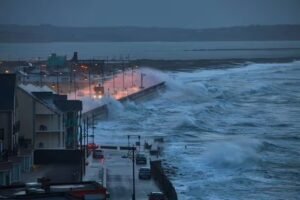
Given that Dublin, a capital city, would have large areas of concrete pavements, it becomes hard to absorb water and prevents rainfall from draining off into the sewage systems. Meanwhile, there are many low-lying areas and parts of the coastal DART [Dublin Area Rapid Transit] lines have been known to be pressure points when the country faces prolonged bad, wet weather.
Cars Submerged Across the Capital
Some of the most affected areas of Dublin during the floods included the towns of Clongriffin and Belmayne, where the nearby River Mayne’s banks burst following intensive periods of rain through the night. What started as heavy rain, had now led to a more serious situation which saw up to 15 cars submerged in underground carparks. Approximately 46mm of rain fell overnight on February 12/13, leaving many residents with no means of transport and a costly bill to foot.
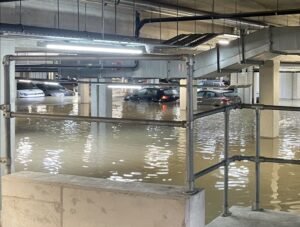
The carpark being submerged in water highlights how quickly a downpour of rain can turn into something far greater. While it doesn’t represent the flooding that occurred across the entire capital, the Clongriffin/Belmayne incident has become one of the clearest examples of how the February Dublin Floods translated from bad weather to severe damage to many residents.
Public Transport and Rail Disruption
Public Transport in Ireland isn’t amazing as is, and these floods only brought more chaos to many commuters who rely on buses and trains daily. Networks across the city experienced serious delays, with multiple diversions and cancellations put in place until the water levels reduced. Dublin Bus and corresponding services were first to feel the effects. High surface water levels and local flooding meant many routes faced diversions, particularly in areas where low-lying roads were impassable. Key routes such as Nutgrove Avenue and the R117 corridor saw disruption as water had pooled onto carriageways, slowing traffic and increasing journey times.
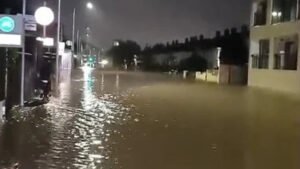
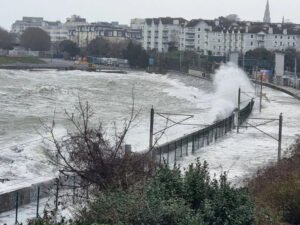
Rail services also faced knock-on effects following the downpour. Sections of the track were flooded and safety checks mean significant delays followed. The coastal corridor of the DART – particularly between Seapoint and Blackrock – were hit the worst. As waves crashed over and rain poured, the track became unusable for some time, causing major inconvenience for both workers and commuters.
Emergency Response and Weather Warnings
In the lead-up to the February foods, Met Éireann, the Irish Meteorological Service, issued multiple Status Yellow rain warnings across Dublin and bordering counties. Warnings of heavy rainfall, flooding and difficult traveling conditions followed and although no official orange or red warnings were in place, the intensity of the rain, had a much larger impact than what was suggested. Emergency services, such as the Dublin Fire Brigade and An Garda Síochána, responded to multiple incidents across the city, especially in those most affected.
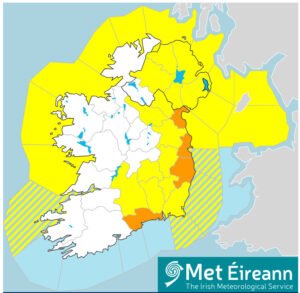
Dublin City Council announced that drainage systems came under serious pressure due to the high volume of rain in such a short period, combined with already, heavily saturated grounds after the wet start that followed with the new year. Officials urged members of the public to stay cautious on flooded roads and to avoid driving through standing water to prevent any further damage. The floods prompted a renewed amount of scrutiny, with calls for review of anti-flood measures as the country continued to face intense rainfalls.
Public and Political Response
Members of the Dáil recognised the disruption and acknowledged the impact it had on many citizens. Many TD’s [Teachta Dála] from different parties highlighted the ‘devastating impact’ the flooding caused, especially the poor state of the roads in north county Dublin. While they all offered words of support, little had been done previously to prevent this. With the government heavily criticised for much of their tenure in the Dáil, this just adds another point to the list of the many promises made, but none followed through. Seeing many businesses and homes destroyed due to the incompetence of a government known to waste money on unnecessary things gives the idea that this political response is more of a quick statement than any meaningful action.
While the government continue to promise a flood relief package, the public are still left to suffer from the effects of this bad weather. Following cars being submerged, and roads being blocked, many have reported flooded houses and damaged gardens. To gain insight into the experiences of those affected, responses from members of the online Reddit community r/askireland were gathered, providing a snapshot of the challenges faced across the country. Responses ranged from roof leaks to more serious situations like gardens being waterlogged and septic tanks erupting.



The scenes captured and the experiences shared point to more than just a spell of bad weather. For many residentrs, the Dublin Floods exposed persistent gaps in infrastructure and the governments inability to prevent them — issues that are likely to remain in focus as calls grow for meaningful flood prevention measures.
What Happens Next
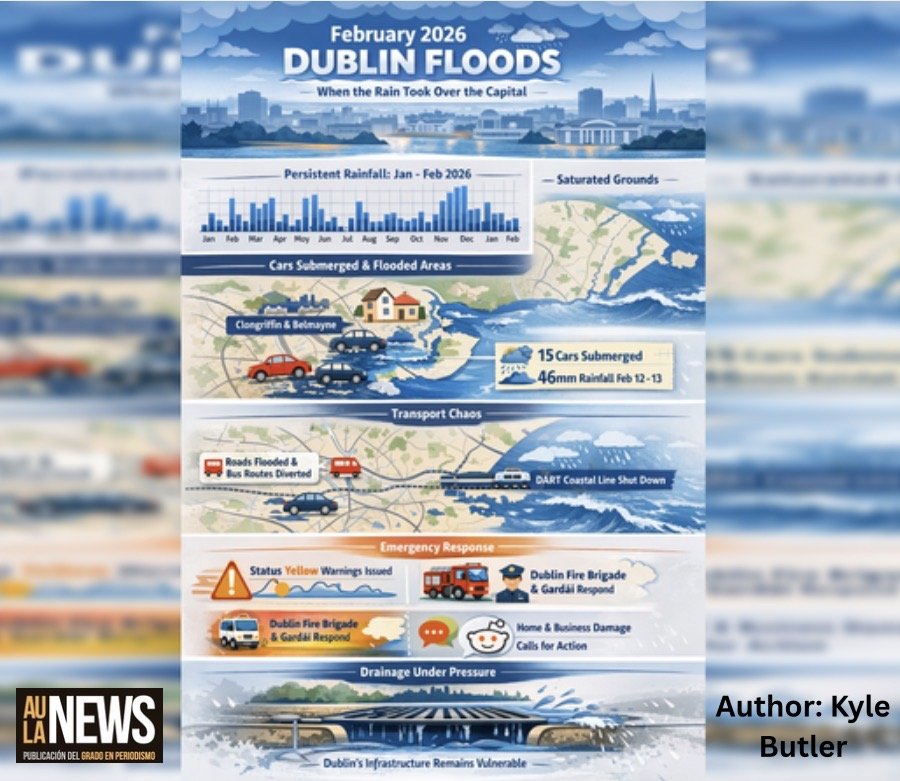
If February’s flooding exposed anything, it’s that Dublin’s vulnerability is no longer just a thought, and instead, now a reality. What occurred across the capital was not just bad weather but the product of sustained pressure on systems that were already under strain. Despite government promises to fix the systems, residents have seen their houses flooded and now raise questions about the long-term effects this will have.
In the immediate aftermath, attention has turned to assessing the current infrastructure to see if it is fit for purpose and to ensure the floods are cleared. Questions, are now being raised about drain capacities and, the long-term plans – particularly those on the exposed coastal lines of Blackrock-Seapoint. While government figures have put out a renewed promise in committing to flood relief investments, many critics point out that the areas affected across the month, have experienced the same issues in recent years. For those who dealt with submerged cars and damaged properties, the concern is less about promises and more about visible action.
With rain falling everyday since the turn of the new year – and little indication of a dry spell – it’s difficult to see how conditions will improve in the short term. Saturated grounds remain across the capital, meaning that new wet spells could lead to renewed flooding and damage. Without dry spells, drainage systems will continue operating under pressure and the same areas will remain vulnerable. In that context, the forthcoming weeks will prove less about returning to normality and more about how effectively the country can handle extreme weather.
